
Home | Gallery | Shops | Street Rod - Fabrication | Endorsements
Our Beginnings | Transport | Employment | Magazine Articles | Contact | Cost
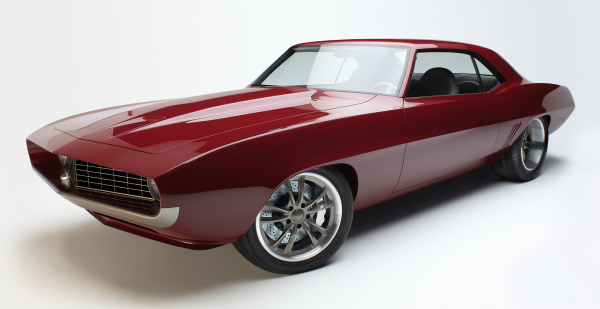
Camaro RestorationWe perform Camaro Restoration to the finest degree. From Super Sports, Ralley Sports and Z-28's we build them all! Totally original to wild customs! Surf our website to see what we are capable of. We know from experience that the key to creating a great Camaro Restoration business is an intense focus on the values that guide its people's actions. These are our Core Values and Beliefs. We respect our people and believe that qualified individuals who are treated with respect and given responsibility respond by performing the best workmanship possible. We require complete honesty and integrity in everything we do. We insist on giving our best effort when performing the art of Camaro Restoration! Clarity in understanding our mission, our goals and what we expect from each other is critical to our success. In all our dealings we will strive to be professional and fair. More then once you have probably thought, who should I choose to build my project? Should I trust my project to a facility thousands of miles away? Obviously Quality and Trust is imperative. As you look through our website and browse the sections you will see a very organized facility with rarely seen details and quality techniques being performed on many different types of projects. The reason we perform Camaro Restoration to this level is that we only build projects for people who are going to keep their dream ride for a long time, perhaps the remainder of their life and then pass it on to that special family member that will enjoy it with the same passion! When building your dream ride with this criteria we are building for the long haul and no tiny detail gets left undone. We know that this type of customer will be waxing and inspecting their pride and joy for many years and we want them to know beyond a shadow of a doubt that they received the Ultimate workmanship on their Camaro project. If you have any questions to help you decide where to have your project built or custom work done, please call us at 210-695-5151 and we will be glad to answer them. We believe in revealing our workmanship to prove our knowledge and integrity to our customers. Our standard setting techniques have been published many times in major magazines and publications. We arrange transport all over the USA for your convenience. We appreciate your business and we thank you for choosing us to build your Camaro ! Sincerely, Jeff Lilly Camaro Back HistoryThe Chevrolet Camaro is a "pony car" made in North America by the Chevrolet Motor Division of General Motors. It was introduced on 29 September 1966 — the start of the 1967 model year and was designed as a competing model to the Ford Mustang. The car shared the platform and major components with the Pontiac Firebird, also introduced in 1967. Four distinct generations of the car were produced before production ended in 2002. A new Camaro is expected to roll off assembly lines in 2009.[1] Origin The Camaro was initially advertised on Top 40 AM radio stations of the day in an attempt to woo the young adult market. Although it was technically a compact car (by the standards of the time), Camaro may also be classified as an intermediate touring car, a sports car, or a muscle car. Though the car's name was contrived with no meaning, GM researchers reportedly found the word in a French dictionary as a slang term for "friend" or "companion." In some automotive periodicals before official release, it was code-named "Panther," however, the project designation for the Camaro was XP-836 and some early GM photos show the final Camaro body labeled "Chaparral".[2] Automotive press asked Chevrolet product managers "What is a Camaro?", and they were told it was "a small, vicious animal that eats Mustangs".[3] The name conveniently fit Chevrolet's "C" naming structure that included Corvair, Chevelle, Chevy II, and Corvette. First generation The first-generation Chevrolet Camaro debuted for the 1967 model year on a brand new rear-wheel drive GM F-body platform and would be available as a 2-door, 2+2 seating, coupe or convertible with a choice of inline-6 and V8 powerplants. The first-generation Camaro would last until the 1969 model year and would eventually inspire the design of the new retro fifth-generation Camaro. Second generation Introduced to market in February of 1970, the second-generation Chevrolet Camaro would be in production for a total of 12 years. The car grew somewhat larger and wider with the new styling; this resulted in a heavier car as well.[4] Still based on the F-body platform, the new Camaro was engineered much like its predecessor in that it still used a unibody structure with a front subframe, leaf springs in the back and A-arms up front for suspension. The car would see major changes in both styling and performance as time progressed from the introduction through the end of second-generation production in 1981. Third generation The third-generation Chevrolet Camaro was introduced for the 1982 model year. It continued to use General Motors' F-body platform and would produce a "20th Anniversary Commemorative Edition" for 1987 and "25th Anniversary Heritage Edition" for 1992. These were also the first Camaros with factory fuel injection, four-speed automatic transmissions, five-speed manual transmissions, four-cylinder engines, 16-inch wheels, and hatchback bodies. It was during the third generation that the famous IROC Camaro was available. The third-generation Camaros would continue through the 1992 model year. Fourth generation The fourth-generation Chevrolet Camaro debuted for the 1993 model year on an updated F-body platform. It would retain the same characteristic since the first-generation's introduction back in 1967; 2-doors, 2+2 seating, available as a coupe or convertible although later introduced in 1994, rear-wheel drive, and a choice of V6 and V8 powerplants. It featured the 5.7 L (350 cid) LT1 V8 engine that had been introduced in the Corvette one year earlier, as well as an optional six-speed manual transmission. The 1998 model year was refreshed and revised with both exterior and engine changes. Replacing the LT1 was GM's all-new 5.7 L (346 cid) LS1 which had been introduced with the Corvette C5. The fourth-gen Camaro would last up through the 2002 model year, at which point production of the F-Body platform was stopped due to low sales.[citation needed] Fifth generation On 9 January, 2006, the first official word regarding a fifth-generation Camaro from General Motors came at the 2006 North American International Auto Show, where the 2006 Camaro Concept was released.[5] The concept is powered by the 400 hp LS2 V8 and equipped with the T-56 six-speed manual transmission. GM also showed the 2007 Camaro Convertible Concept on 6 January, 2007 at the 2007 North American International Auto Show. The Camaro will be offered with both V6 and V8 engines, and have available automatic and manual transmissions. Pricing has not been officially announced yet, however, GM has stated that it will be competitive with the Ford Mustang. Appearances in pop culture Due to its persistent popularity and long production run, the Camaro has been referenced, shown, or used in nearly all forms of media since the introduction of the 1967 model. Some of these include:
Info Source: http://en.wikipedia.org/wiki |
|
|
Our Techniques and Finished work have appeared month after month in magazines.
![]() Click Here For More Magazines ![]() |